A certain family of shapes turns up constantly in 3D printed products: repeating ripples, twisted towers, honeycomb lattices, surfaces that seem to flow. They are not a style someone chose to be fashionable. They are the visible result of a different way of defining an object.
Drawn versus defined
A conventional design is drawn. Someone decides where each surface goes, and if they want it different they move it.
A parametric design is defined by a rule with numbers in it. Something like: a circular profile, rotated up an axis, expanding by a percentage per revolution, with a wave of a given amplitude and frequency running around it. Change any of those numbers and the entire object regenerates — taller, tighter, rippled more deeply.
The designer is not moving surfaces. They are adjusting the rule and looking at what comes out. That is a fundamentally different activity, and it produces shapes nobody would have drawn by hand because nobody would have thought of them.
Why it goes with 3D printing specifically
Injection moulding requires a part to come out of a mould. That imposes hard constraints: no undercuts, draft angles on every vertical face, and no internal geometry that the mould cannot reach. Those constraints shaped almost every mass-produced plastic object you have ever handled.
Printing has none of them. It builds a shape layer by layer, so an undercut is free, an internal lattice is free, and a form that twists back on itself is free. Which means the shapes that are natural to parametric design — the ones with internal complexity and no obvious parting line — are exactly the shapes printing is good at and moulding cannot do.
That is why the aesthetic exists. It is not decoration applied to a product; it is the product of a manufacturing method that removed the old constraints.
What it does to light
This is the part you actually experience. A repeating ridged surface has a different angle at every point, so every ridge catches light differently and casts a small shadow on the one below. The object changes as you walk past it, in a way a smooth surface does not.
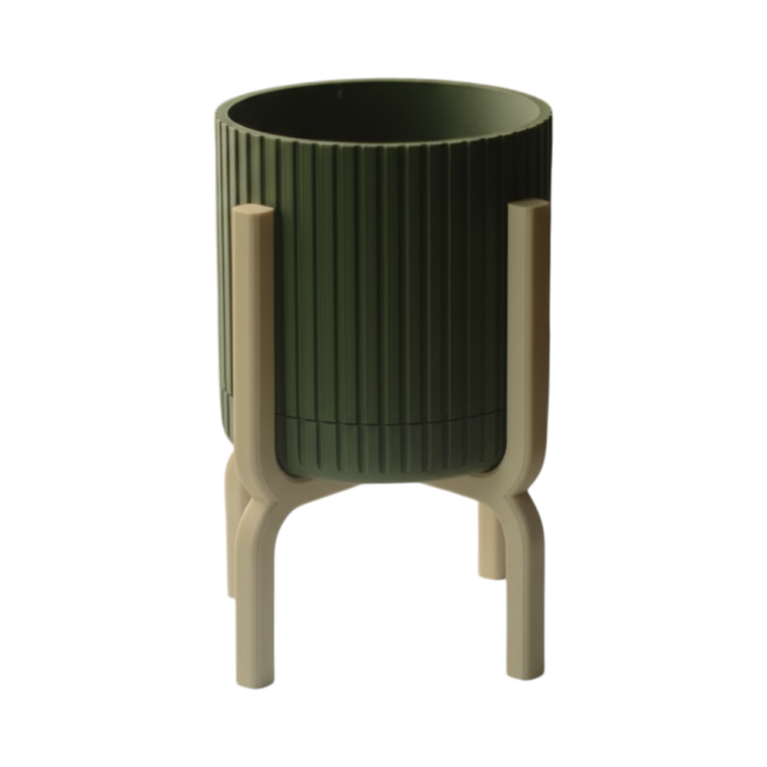
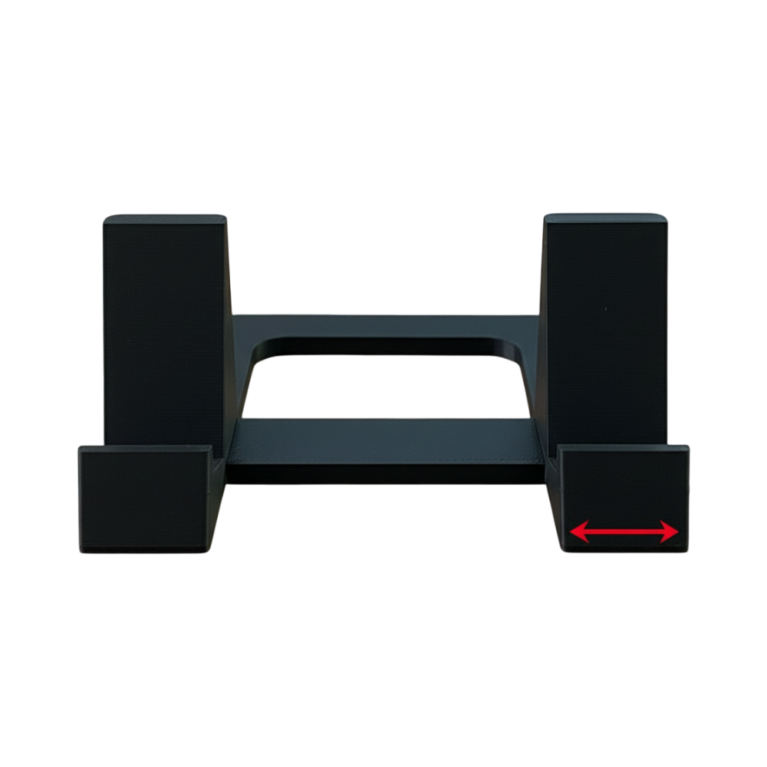
Our wave parametric device stand is built from a repeating wave for exactly this reason, and the Echo planter uses concentric stepped ridges that read as a frozen ripple in raking light.
The practical consequence: matte finishes and side lighting. Gloss flattens the ridges into one highlight and you lose the effect entirely. Light from directly in front does the same. Put a parametric piece where light comes from one side and it earns its keep.
Faceting, which is the other half
Low-poly and faceted designs work on a related principle: the surface is broken into flat planes, each catching light at its own angle. Instead of a smooth gradient you get discrete steps of brightness, which reads as crystalline.
Our low-poly wall planter, hexagonal planter and octagonal planter with legs all use this. The flat faces also have a practical benefit: a faceted pot sits tight against a wall or into a corner in a way a cylinder cannot.
Lattices, and why they are not just decorative
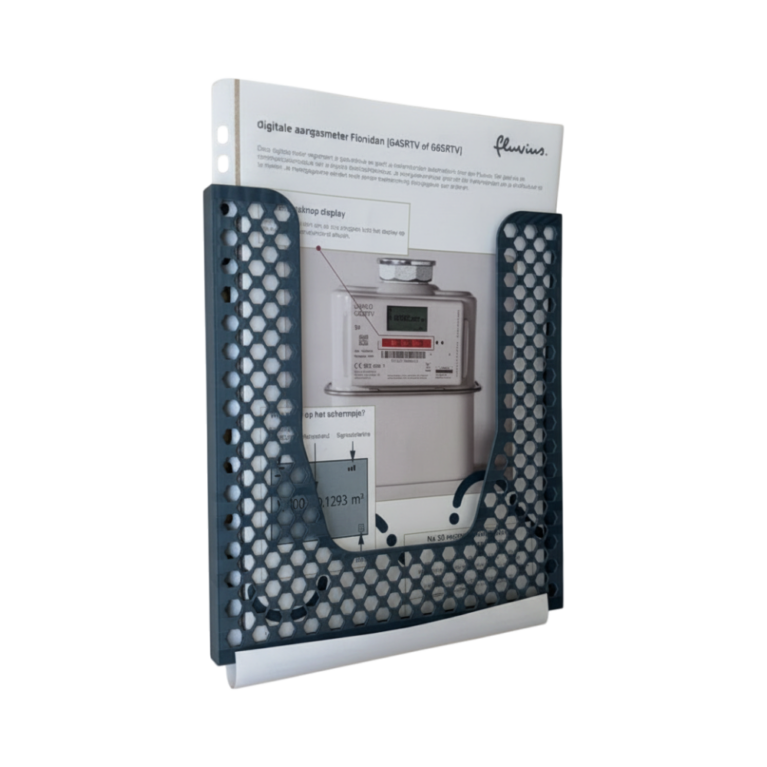
An internal lattice is the most genuinely useful parametric technique, and it is usually invisible. A structure built as a gyroid or honeycomb lattice can be a fraction of the weight of a solid part with most of the stiffness, because material near the neutral axis of a beam contributes very little to its strength.
That is why a printed piece can feel substantial without being heavy, and why a flex basket can have walls that give when overfilled and spring back — the lattice is doing mechanical work, not styling.
Where the aesthetic goes wrong
When the rule is applied without judgement. A frequency too high and the object reads as noise; too low and it looks like a mistake. Ridges that are too shallow disappear at arm’s length; too deep and they become dust traps.
The honest version of parametric design involves a lot of printing things, looking at them in real light, and adjusting the numbers. The computer generates; a person still decides.
If you want to see it
The abstract and geometric range is where most of this lives, and everything is printed to order in Canada — which means that if you want the same rule at a different size, that is a number rather than a new product.
We have written more about what printing can make that moulding cannot in designing for 3D printing.