Hold a lithophane up in a lit room and it looks like a slightly textured white panel. Put a light behind it and a photograph appears — full greyscale, with real tonal range. It is one of the few genuinely surprising things you can make, and it works on a principle a child can grasp in one sentence.
The principle
An image is carved in thickness rather than in pigment. Where the picture should be bright, the material is thin and lets a lot of light through. Where it should be dark, the material is thick and blocks most of it. Everything in between is a gradient of depth.
Because the effect depends entirely on transmitted light, it is invisible in reflected light. That is why it vanishes when the lamp is off. Nothing is hidden and nothing is printed — the image is the geometry.
It is not a new idea
Lithophanes date from the 1820s, in porcelain, and were a genuine Victorian craze — panels in windows, in lamp shades, in nightlight screens. They went out of fashion partly because they were extremely difficult to make: each one was carved by hand in wax, cast, and fired, and the tonal range had to be judged in reverse by someone who could not see the result until it came out of the kiln.
3D printing brought them back because it does that part trivially. Converting an image to a depth map is arithmetic, and a printer lays down a thickness gradient without complaint.
What makes a photograph work as a lithophane
Not all of them do. The ones that work share a few things:
- Strong contrast. The medium has a limited dynamic range. A flat, evenly-lit photo comes out muddy; one with real blacks and real whites comes out sharp.
- A clear subject, close up. A face, a pet, a building. A wide landscape with a lot of fine detail loses that detail entirely.
- A simple background. Busy backgrounds compete with the subject and the eye cannot separate them the way it can in a colour photo.
- Good resolution. A screenshot of a screenshot will not do — the depth map is only as good as the source.
Portraits in front of a plain wall are close to ideal. Backlit sunset shots almost never work, because the tonal information is all at one end.
Warm light or cool light
Both work and they do different things. A warm 2700K LED gives a soft, sepia-toned image that reads as nostalgic. A cool white gives noticeably higher apparent contrast and sharper edges. If the subject is a face, warm is usually kinder; if it is architecture or lettering, cool is crisper.
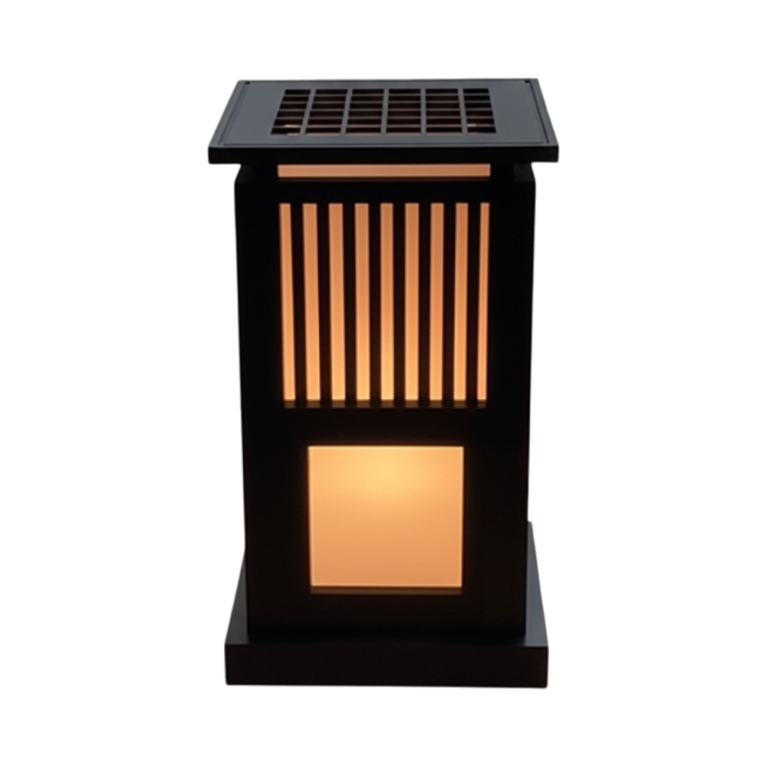
Our lithophane lantern is built for a standard LED tealight or a small USB light kit, and takes four panels — so there is an image on every side rather than one to be aimed at the room.
Why it must be an LED
The whole effect depends on the panel being thin. Thin plastic and heat are a bad combination: an incandescent bulb or a real candle flame will soften and distort the panel, and the distortion ruins the image permanently. LEDs run cool enough that this is simply not an issue, which is the only reason the technique works in printed plastic at all.
What they are actually good for
Gifts that have to mean something specific — a photograph of a person, a pet, a house, a place. Memorial pieces, where the object is quiet and unlabelled until it is lit. Anniversaries. They are one of the very few personalised gifts that does not look like a personalised gift, because in daylight it is just a well-made white object.
They are also a good demonstration of what made-to-order manufacturing is for. A lithophane of your grandmother is not a product anyone can stock. It exists because someone asked for it and it was made. If you want one, send us the image and we will tell you honestly whether it will work before anything is printed — see contact us.
Looking after one
Dust with a soft dry brush rather than a cloth, which can catch on the surface relief. Keep it out of direct sun — prolonged UV is the one thing that degrades the material over years. And keep it away from heat, for the reason above.
Beyond that they last indefinitely. The image cannot fade, because it is not an image. It is a shape.
The rest of our lighting range is printed to order in Canada on the same basis.