Household storage fails when things accumulate. Workshop storage fails at a different point: you know you own the thing, you know it is in this room, and you cannot find it. Twenty minutes later you buy another one.
The problem is retrieval, and it has three components.
1. Size the container to the contents, not to the catalogue
A drawer of mixed fasteners is not storage, it is a lucky dip. The useful unit is small — one size of one thing per container — which means you need many small containers rather than a few large ones.
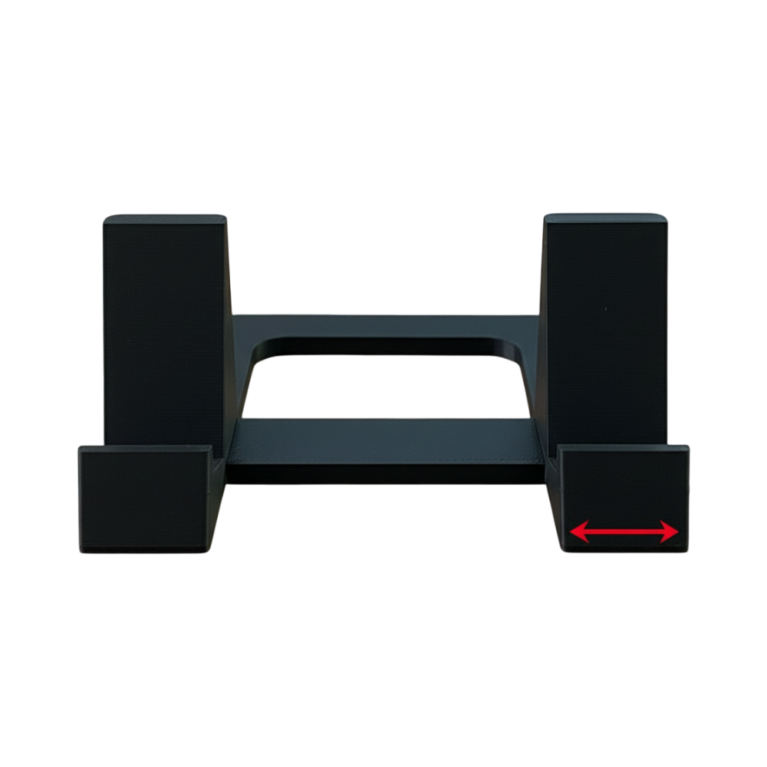
This is where standard bins fail. They come in a few sizes, and the sizes are chosen for shipping efficiency. What a workshop actually needs is a grid of containers matched to a shelf, and made-to-order changes that completely: send the internal shelf dimensions and the bins are printed to them. Our scalable storage bins exist for exactly this.
Most people ask for a run of four or five across a shelf, which uses the full width with nothing wasted at either end — and across a whole rack that is a meaningful gain.
2. You have to be able to see in
A bin with four full-height walls has to come off the shelf to be searched, and once it does, the bin above has to come off first. That is the friction that kills any system.
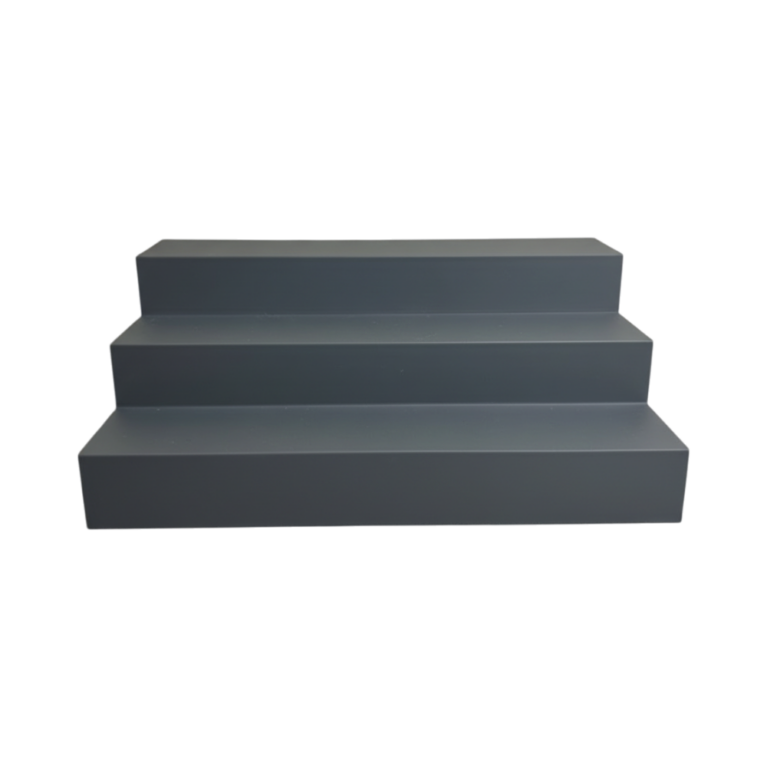
A cut-down front means you see and reach the contents in place. Combined with a tiered riser on a deep shelf so the back row is visible, the whole rack becomes readable from standing.
The test is whether you can find something without moving anything. If you cannot, the layout is wrong, not your memory.
3. One label, in one place, in one format
Label the front face, always, in the same spot on every bin. Not the lid, not the side.
And keep the format consistent: what it is, then the size. “Bolt M4 20mm” rather than “20mm M4 bolts” on one and “M4x20” on another. Consistency matters more than the scheme itself, because scanning a rack relies on your eye landing in the same place on every label.
Colour-code at the category level — fasteners one colour, electrical another, consumables a third. At print time colour costs nothing, and it lets you find the right region of the rack from across the room before you start reading.
The small parts problem
Anything below about 5mm needs a lidded container, because it will end up on the floor otherwise. A hinged box printed as one piece — lid, hinge and body — solves the other half of it, which is that a separate lid always goes missing.
For a bench in active use, a tray with defined wells beside you holds the handful of things the current job needs. Put them back in their bins at the end, not during.
Shadow boards, for the tools you use constantly
For the ten tools you reach for every session, a shadow board beats any drawer: you see instantly whether something is missing, and putting it back requires no decision.
Drawers are for the other ninety tools. The distinction is frequency, not value.
What to do about the duplicates you already own
Every workshop has them, and consolidating is a one-afternoon job that pays for itself immediately. Pull everything of one category onto a bench, sort by size, and put it away in the new scheme. You will find three of several things and none of one you thought you had.
Do one category, not the whole workshop. Fasteners first — they are the worst offender in every shop.
The unglamorous truth
Storage systems do not fail because the containers were wrong. They fail because putting things back was harder than putting them down. Every decision above — bins sized to the shelf, open fronts, one label position, a tray for the current job — is aimed at that single friction point.
If putting it back takes two seconds, the system survives. If it takes ten, it does not.
The storage and organisation range is printed to order in Canada. Send the internal shelf measurements and we will make it fit the rack you have.