Bonsai is a display art as much as a horticultural one. The tree is grown over years to be looked at from a particular angle, and most of that work is thrown away by putting it on a kitchen table.
The height rule
The conventional guidance is that the viewer’s eye should fall somewhere around the lower third of the tree — not level with the pot, not level with the canopy.
The reason is perspective. Viewed from above, you see the top of the foliage and the tree looks like a shrub in a dish. Viewed from slightly below the canopy, you see the trunk line, the branch structure and the space between branches, which is where the years of work actually live.
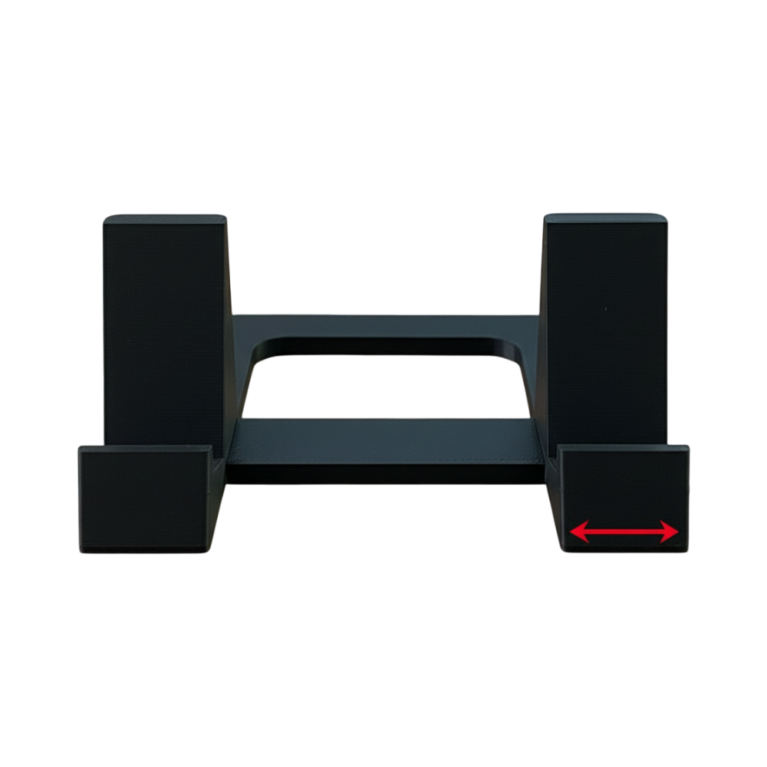
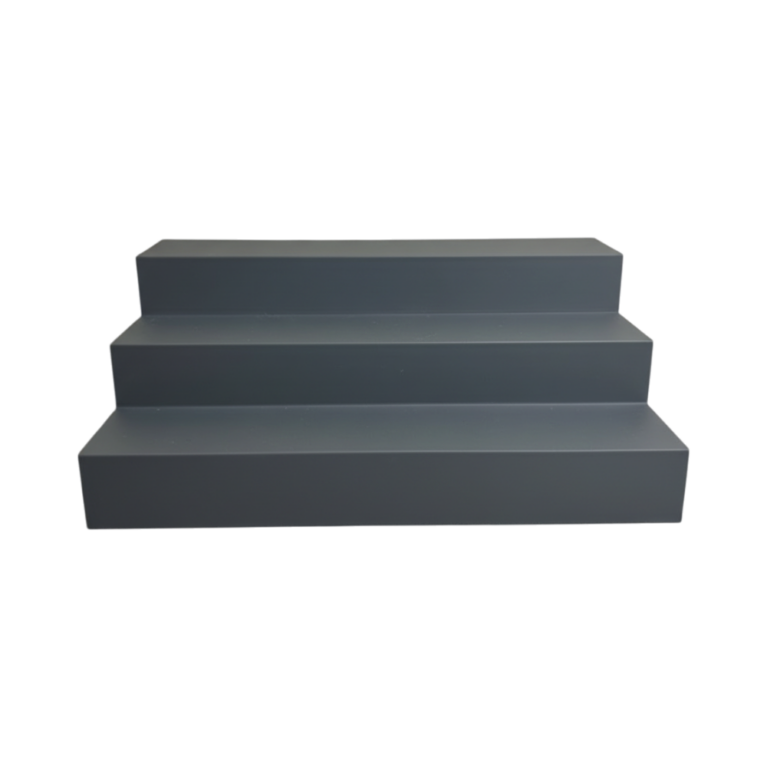
For a small tree on a side table, that usually means lifting it another 20 to 40cm. A stand does that, and it is the single change that most improves how a bonsai reads.
What a stand should do, and not do
It should be plain. The stand is a plinth, not a feature. Anything patterned, brightly coloured or sculptural competes with the tree and loses — and in losing, spoils both.
It should be smaller in footprint than the pot’s visual weight. A stand wider than the pot looks like furniture; one slightly narrower makes the tree appear to float.
It should be stable. A bonsai pot is shallow, heavy and top-loaded, which is an unforgiving combination. Weight low down, and a flat base that does not rock.
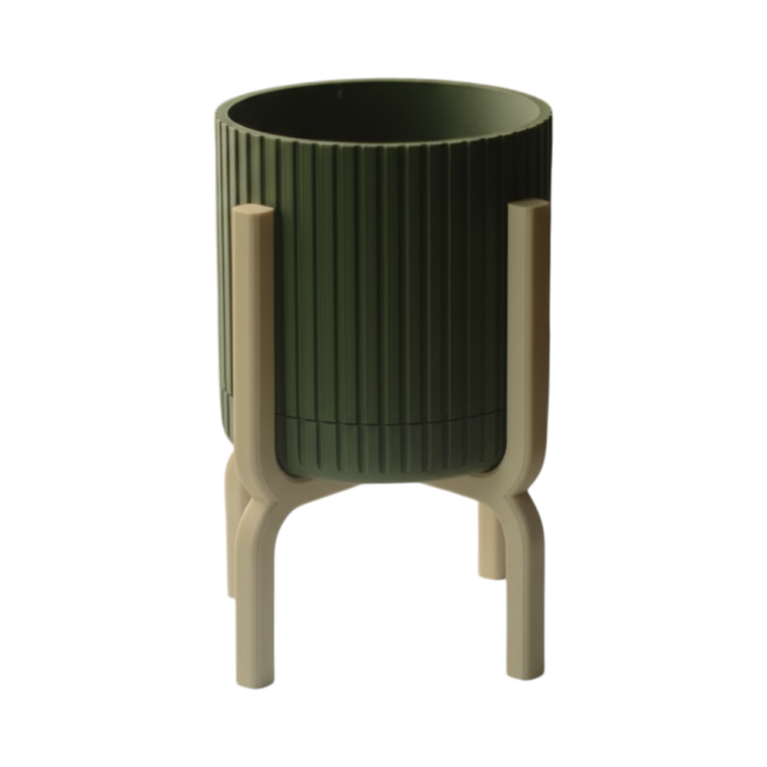
Our tree stump pedestal works for larger trees where a slightly organic plinth suits the subject; for smaller ones a matched planter and stand keeps the proportions consistent because the two were drawn together.
The front of a tree
Every bonsai has a front — the angle it was styled to be seen from. You can usually find it by looking for where the trunk leans slightly toward you, the lowest branch does not point directly at you, and the root flare is most visible.
Once you have found it, place the tree so the front faces into the room, and rotate it slightly — a few degrees off square — rather than dead-on. Square is static; a small rotation implies the tree exists in space rather than being presented.
Asymmetry, and the off-centre pot
A tree centred in its pot looks planted. A tree set off-centre, with more space on the side the trunk leans away from, looks like it grew somewhere.
The same applies to the display as a whole: a bonsai in the centre of a shelf is a specimen, a bonsai a third of the way along with empty space beside it is a composition.
Accent plantings, briefly
Traditional display often pairs the tree with a small accent — a grass, a moss planting, a tiny flowering plant — placed low and to one side, at a distance roughly equal to the tree’s height. It gives scale and season.
The accent should be small enough that there is no competition. If you find yourself looking at the accent, it is too big.
A small pot from a matched set works for this, kept plain and low.
The floating option
If you want something that is not a traditional display at all, a floating bonsai planter — where the bowl appears to hover, held by strands too fine to read at arm’s length — is a genuinely different object. Keep the planting light, because the illusion depends on the strands staying straight.
It is not a traditional display and does not pretend to be. It is a good example of a form that only exists because printing can make it.
Light and rotation, practically
Most species sold as indoor bonsai — ficus, Chinese elm, jade — want the brightest indirect light you have, and they lean toward it. Rotate the tree a quarter turn every week or two so the growth stays even.
That rotation is also why a stand with a clean circular footprint is easier to live with than one with a defined front: you can turn the tree without the display looking wrong.
Where not to put it
Above a radiator, beside a heating vent, or on a windowsill that gets hard afternoon sun through glass. Bonsai are in shallow pots with little soil volume, which means they dry out fast and have almost no thermal buffer. A location that would be survivable for a houseplant in a large pot can be fatal here.
The planters and pots range includes stands, pedestals and shallow trays, printed to order in Canada — including at a height specified to suit a particular tree and a particular seat.