The fixture trade is built around volume. Risers, plinths, shelf talkers and counter displays are sold in cartons, with minimums that make sense for a chain rolling out forty stores and no sense at all for one shop on a high street.
So independents improvise, and the improvisation shows.
What minimums actually cost a small shop
It is not just the cash. A minimum order forces three decisions you would rather not make.
You commit before you know. Fifty acrylic risers arrive, you set the counter, and two weeks of watching customers tells you the layout is wrong. Now the sunk cost argues against changing it.
You store the surplus. Small shops do not have back rooms. Forty spare risers occupy space that should hold stock.
You take the standard size. Your counter is 84cm wide because that is how the building is. The fixture is 60cm because that is a carton size. You lose 24cm of counter and live with it.
What made-to-order changes
Printing a fixture after the order means the quantity is whatever you need and the dimension is whatever your shop is.
One is a normal order. Try a single riser on the counter for a fortnight. If it works, order five more. If it does not, you have spent the price of one.
The size is yours. Send the internal width of the shelf or the counter and the fixture is made to it. A display that uses the full width with nothing left over is the difference between a shop that looks fitted and one that looks furnished.
Colour is a choice, not a stock code. Matte black for most retail, because it recedes behind the product — but if your brand is a specific colour, that is a request rather than a special order.
You can iterate. Version two next month, if version one taught you something. That is not possible with a carton of fifty.
What is worth buying first
In rough order of return per dollar for a small shop:
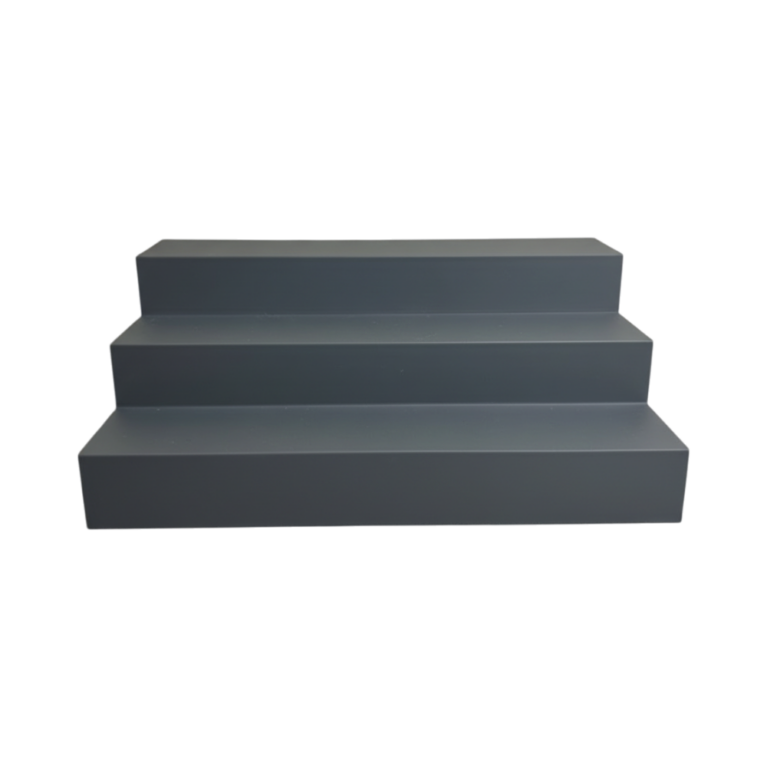
- Height on the counter. A tiered riser turns a flat counter into three visible levels. Nothing else changes a shop for less.
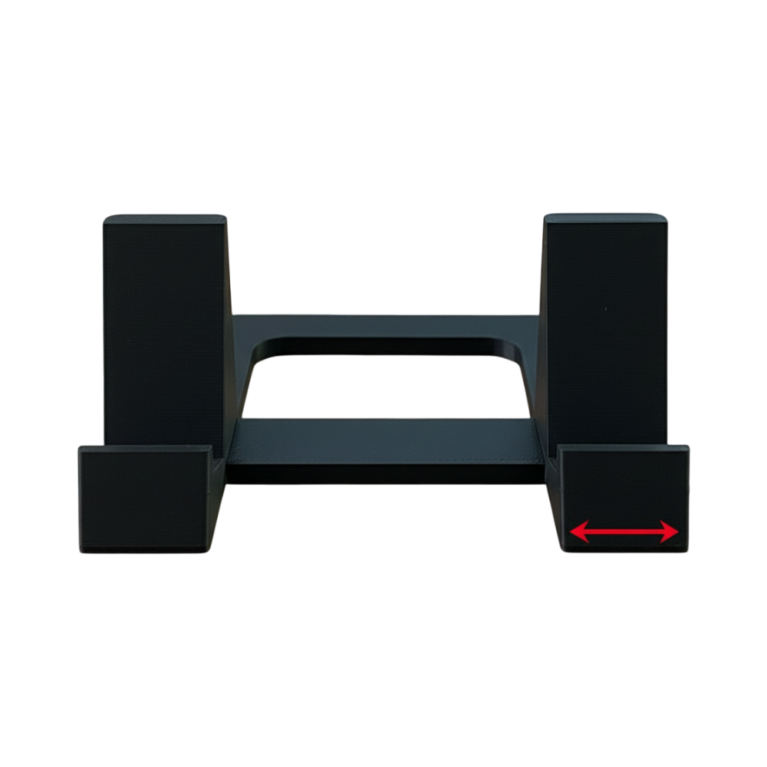
- A stand that packs down, if you also do markets — our craft fair stand breaks flat and travels.
- A display-and-storage box, which halves what you carry to an event: the sales display box presents open and packs closed.
- Card holders at the till — a plain one if the card is the designed object, a patterned one if the desk should say something first.
- Shelf risers in the stockroom, so staff can see the back of a shelf. Unglamorous, and it reduces the “we’re out” that turns out to mean “it was behind something”.
The things that are not fixtures
Two cheap changes outperform most fixtures.
Light your displays. Retail lighting in leased units is usually a grid of 4000K panels, which flattens everything. A warm LED strip under a shelf edge, aimed at the product, is transformative for under fifty dollars.
Price everything, legibly. The most common reason a customer puts something down is not knowing what it costs and not wanting to ask.
Consignment and wholesale, briefly
If you stock other makers’ work, or you are the maker being stocked, made-to-order suits consignment particularly well: you are not asking a shop to buy fifty units, and they are not asking you to carry the risk. Small repeat orders track actual sales instead of guesses about them.
We work with shops and market traders on this regularly, including matched fixture sets across several locations. Details are on our services page, and ordering in bulk covers how the pricing works.
The measurement to send
Internal width, depth and height of the space the fixture goes in, and a photograph of the spot. That is enough to quote and, usually, enough to make. If you would rather talk it through, get in touch.
The shelving and display range is printed to order in Canada.