Bookends fail in a specific and slightly funny way: they slide. A row of books pushes sideways with real force, and a light ornament sitting on a smooth shelf simply travels until the books fall over anyway.
The L-foot is the whole trick
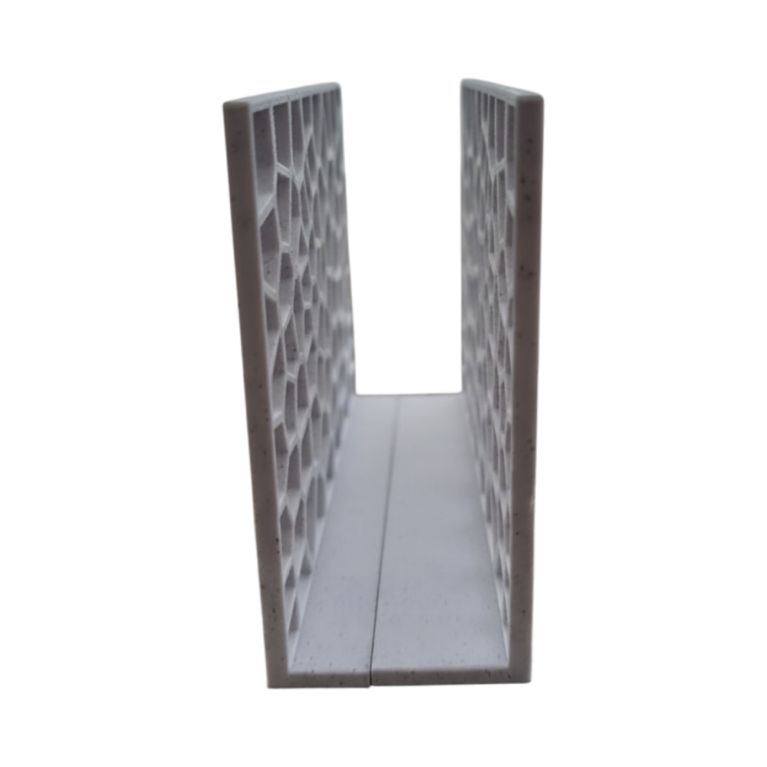
A good bookend has a thin horizontal foot that slides under the first book. The weight of the books then holds the bookend down, and the more books you add the more firmly it is anchored. Without that foot you are relying on friction and mass, and a printed object has little of either.
So the first question about any bookend is: does it have a foot that goes under the books? If it does not, it is a decorative object that happens to sit near books – which is fine, as long as that is what you wanted. Our pillar bookend and arch bookend are both designed around it.
Adding weight when you need it
Some printed bookends are designed to be filled – sand, gravel, coins – through a hidden opening in the base. That solves the mass problem entirely and is worth looking for if you are shelving heavy hardbacks. If the design does not have a cavity, a felt pad underneath at least adds friction, and it stops the shelf getting scratched.
Shelf surface matters more than you would expect
Glass and polished laminate are the worst case: almost no friction and nothing for a foot to grip. Wood and painted MDF are much more forgiving. If your shelves are glass, prioritise the under-foot design over everything else.
Height against your books
A bookend should reach roughly half to two-thirds of the height of the books it is holding. Too short and tall paperbacks fold over the top; too tall and it hides the spines you are trying to display.
Pairs versus singles
If a row sits against a wall or the end of a shelf, one bookend is enough. Free-standing rows need two, and they need to match – which is an argument for buying a pair together so they come off the machines in one run.
The ornamental ones
Plenty of printed bookends are really sculptures with a book-shaped excuse, and there is nothing wrong with that. Just do not expect a decorative piece to restrain twelve hardbacks. Use it for a short run of light books, or prop it against something structural.
More: styling a shelf and what wall shelves will hold.