The question is always “how much weight will it take”, and the honest answer is that the shelf is rarely the limiting factor. The wall fixing is.
The shelf itself
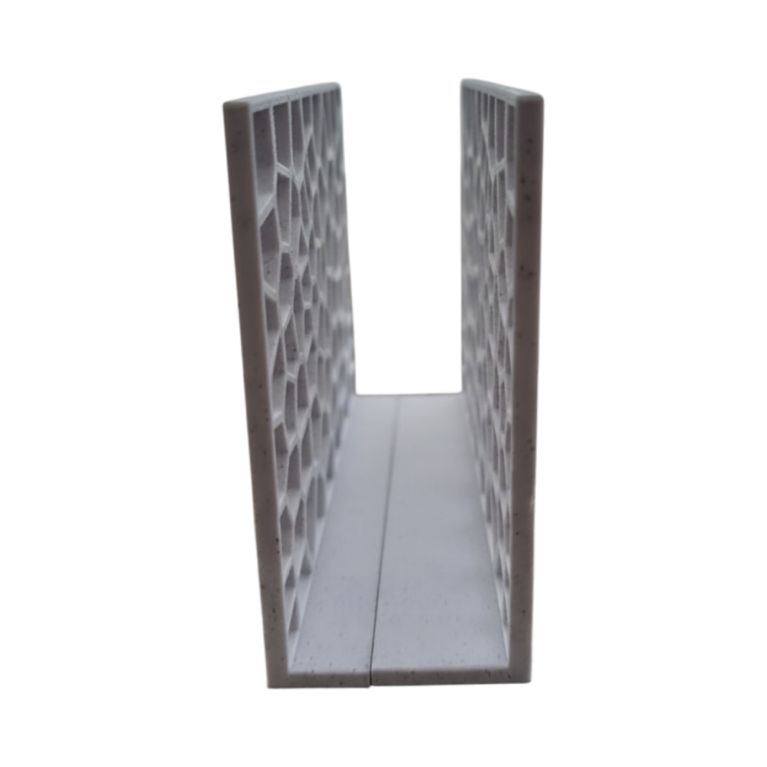
A well-designed printed shelf with a solid bracket handles a few kilograms comfortably – books, small plants, decor, a speaker. Failure in the shelf shows up as slow sag rather than a snap, and it happens over months under constant load rather than suddenly. Weight sitting at the outer edge stresses it far more than the same weight against the wall, so load the back.
Drywall is where shelves actually fail
A screw straight into drywall holds almost nothing. Use a proper anchor: self-drilling plastic anchors are fine for light loads, toggle or molly bolts for anything heavier. Best of all, find a stud – a stud-mounted shelf will outlast the shelf.
Plaster, brick and concrete
Old plaster crumbles if you rush. Drill slowly, no hammer action, and use a longer anchor that reaches the lath behind. Brick and concrete need a masonry bit and a plug; there is no shortcut and the job takes five extra minutes.
Levelling
Use a level, not your eye. A shelf that is 2mm out looks fine empty and obviously crooked once objects sit on it, because their vertical lines give the error away. Mark both holes before drilling either.
Plants are heavier than you think
A wall planter with damp soil can weigh three or four times its dry weight, and that weight changes every time you water. Fix into a stud or use an anchor rated well beyond the wet weight, and make sure any drainage has somewhere to go that is not your wall.
If you rent
Adhesive strips genuinely work for light printed shelves on clean painted drywall – these pieces are light even loaded. Clean with isopropyl alcohol, let it dry, press for thirty seconds and leave it an hour before loading. They will not hold on textured or chalky matte paint, whatever the packaging says.
More: hanging printed wall art and storage that fits the gap you have.