A painted army on a flat shelf is a front rank and a rumour. The obvious fix is a riser, and the obvious riser is the one sold for spice jars — which is where most collectors quietly lose half their cabinet.
Step depth is the whole argument
A retail riser is drawn around a jar or a bottle: something like 6 to 7cm deep per step. A standard infantry base is 25mm, a larger one 32mm, and a cavalry or monster base perhaps 50mm.
Put 25mm figures on a 65mm step and you waste 40mm per row. Over four rows that is 160mm of cabinet depth — most of a shelf — spent on air.
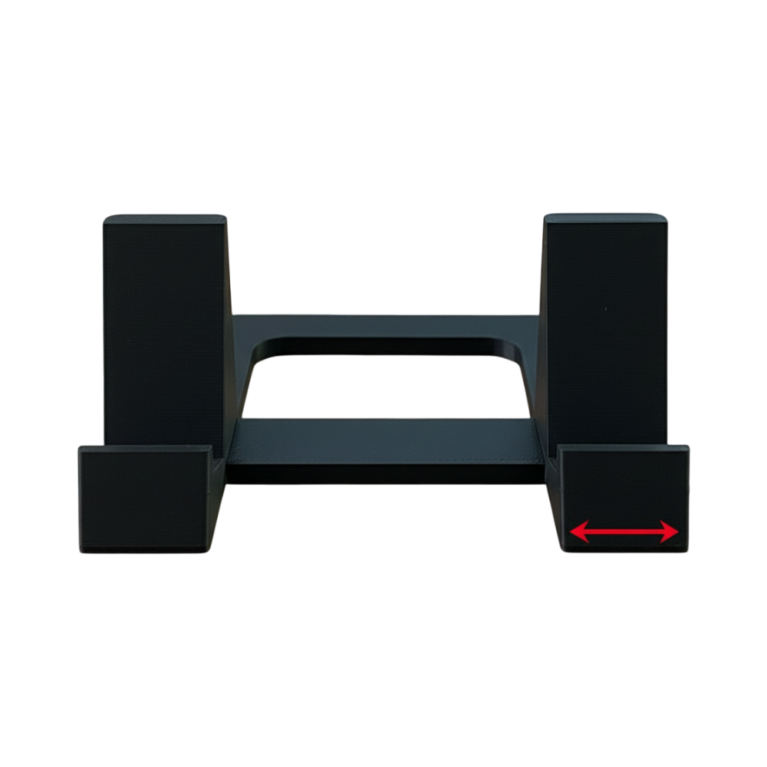
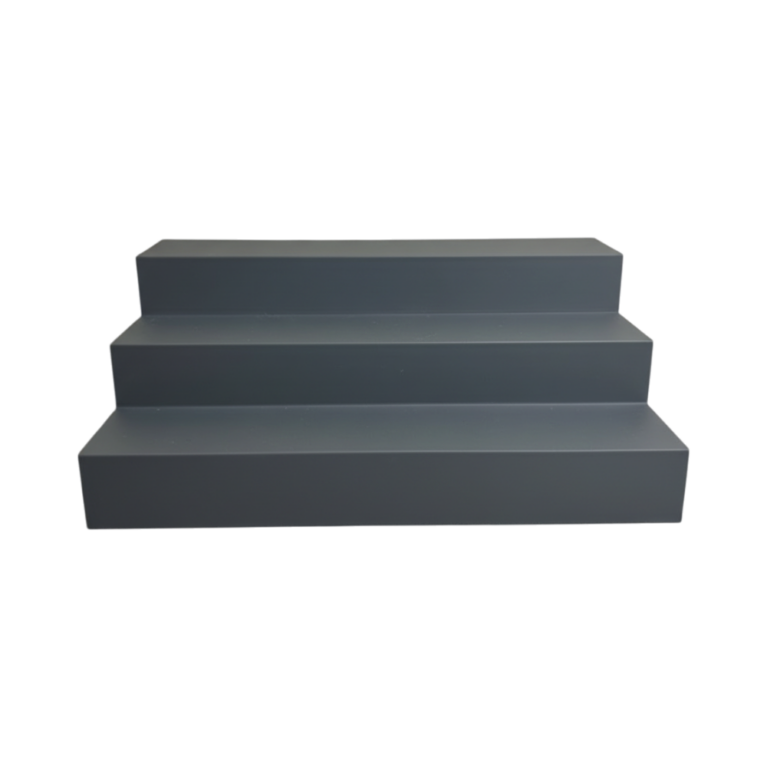
A stand drawn for miniatures uses a step depth matched to the bases, which typically fits close to twice as many figures in the same footprint. Our miniature display stand and modular tiered shelves are both drawn this way, and the modular version interlocks so you add depth as the collection grows — which it will.
Step height: enough to see the model, not the base
For jars you want to read the label. For miniatures you want to see the model, and the part that matters is the upper two-thirds — the torso, the head, the weapon.
A rise of roughly 25 to 30mm per step clears the model in front for standard infantry. Tall models, banners and anything with a raised weapon need more, which is the argument for putting the tallest pieces at the back regardless of what tier they end up on.
Cabinet lighting, and the mistake everyone makes
Most display cabinets are lit from a strip at the top front. That throws light down the front of the models and leaves the faces in shadow — precisely the part that was hardest to paint.
Two fixes. Add a light at the back of the cabinet as well, even a weak one, so faces are lit from behind and below rather than from above only. And keep the riser matte. A glossy riser bounces the top light straight back into the viewer’s eye, which is why painted models in a shiny cabinet look washed out.
Black matte is the standard for the same reason gallery plinths are: it removes itself. Everything you see is the model. A white or coloured riser competes with the paint job, and after a few weeks you will stop seeing the models and start seeing the furniture.
Fitting the cabinet you have
The two dimensions that decide this are the internal depth and the shelf-to-shelf height. IKEA Detolf and Billy variants are the usual homes for a collection in Canada, and they have quite different depths — measuring takes a minute and saves a stand that does not fit.
Because ours are printed to order, an exact internal width is a request rather than a compromise. A riser that spans the full shelf with no gap at either end looks like cabinetry; one that is three inches short looks like an accessory.
Arranging so it reads
- Group by unit or faction, not by size. A collection that reads as armies is more interesting than one that reads as a gradient.
- Leave gaps. A packed shelf is a wall of colour. A little space between groups lets the eye separate them.
- Tallest at the back, obviously, but also most detailed at the front — fine work is wasted at the back of a cabinet no matter how well stepped it is.
- Rotate. Whatever is at the front becomes invisible after two months because you have stopped looking at it. Swapping the front rank twice a year makes the collection feel new for nothing.
Dust, the real enemy
An open shelf collects dust on horizontal surfaces, which on a miniature means shoulders, banners and upturned faces. A soft makeup brush, dry, once a month, handles it. Compressed air at close range will take paint off fine edges — hold it well back if you use it at all.
A closed cabinet reduces the problem by an order of magnitude and is the single best upgrade for a collection you care about, riser or no riser.
The shelving and display range includes stands for miniatures, figures and collectibles, printed to order in Canada in matte black or any colour we stock.