Shoe storage sold in Canada is mostly designed for a climate Canada does not have. Enclosed cabinets, fabric boxes, under-bed drawers — all fine for a wardrobe of dry shoes and all wrong for six months of salt, slush and wet wool.
Open, not closed
A wet boot in an enclosed cabinet does not dry. It sits in its own humidity, the lining stays damp, and within a couple of weeks the entryway develops the smell every Canadian front hall has in March.
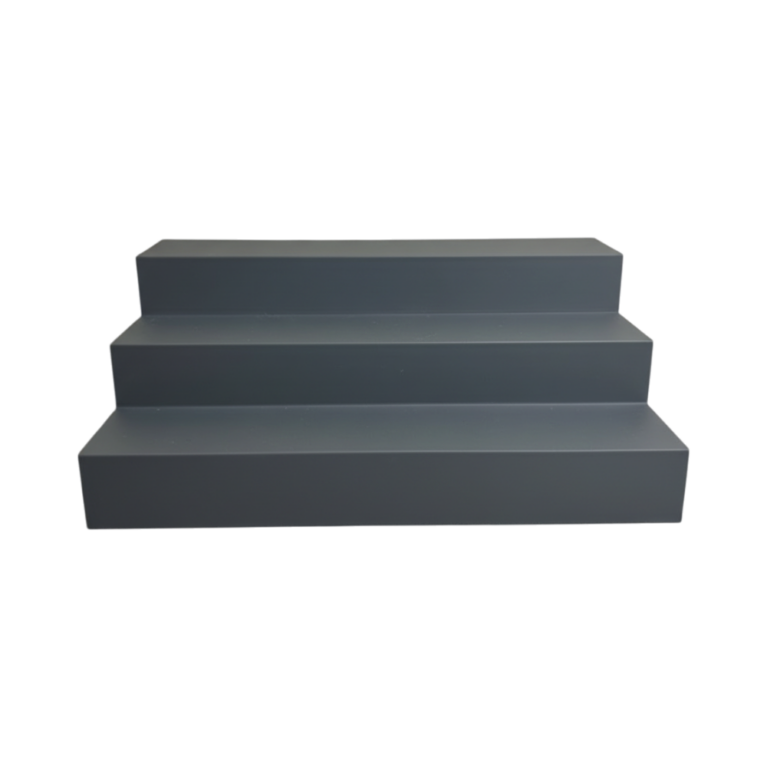
Open-sided storage lets air move across the whole shoe. It is less tidy-looking than a cabinet with a door, and it is meaningfully better at the actual job. Our modular shoe rack has open sides for exactly this reason, and the tiers stack so you set the height to the pile you actually have.
If you want the appearance of a closed cabinet, the compromise is a cabinet with a genuinely ventilated back and a tray in the bottom — not a sealed box with a decorative front.
Boots need more height than the rack you are looking at
The single most common sizing error. A standard shoe rack tier is around 15 to 18cm, which takes a sneaker and a dress shoe. A winter boot is 25 to 35cm tall, and a tall boot more.
The practical answer is mixed heights: one tall tier at the bottom for boots, shorter tiers above for everything else. A modular rack lets you do that; a fixed one does not, which is why most people end up with boots lying on the floor beside a rack full of sandals.
Salt
Road salt does three things. It leaves white tidemarks on leather and fabric, it accelerates corrosion on any metal — eyelets, buckles, the rack itself — and it transfers to whatever the boot touches.
Two habits handle most of it. A tray or a mat under the rack that can be lifted and rinsed, rather than carpet. And wiping the white marks off leather while they are fresh with a damp cloth and a little vinegar in the water, because once salt has dried into leather repeatedly it draws the oils out and the leather cracks.
Whatever rack you buy should wipe clean. In February it will need to.
The drip problem
A boot brought in from slush carries a surprising amount of water, and it all ends up wherever the boot is standing. On hardwood that is a genuine problem over a winter — repeated wetting lifts the finish and eventually the grain.
A boot tray with a raised lip is the cheapest insurance in the house. Under the rack, not beside it.
Height off the floor
A rack that lifts shoes clear of the floor is better than one that sits flat, for two reasons. It lets the floor dry and be cleaned underneath, and it stops the bottom row sitting in whatever meltwater has pooled.
Five centimetres is enough. It does not need to be a piece of furniture on legs.
How many pairs, honestly
The number of shoes in a front hall should be the number in active rotation, which in winter is two or three pairs per person: boots, indoor shoes, and one other. Everything else belongs in a bedroom closet.
The reason entryway storage overflows is not usually a lack of storage. It is that the entryway has become the default location for every shoe in the house. A rack sized for the active rotation, and a seasonal move twice a year, works better than a larger rack.
The wall option
In a narrow hall where floor space is the constraint, a wall-mounted rack gets the shoes off the ground entirely and lets you clean underneath. Our shoe rack and wall shelf does both jobs — storage below, a surface above for keys and post.
Fix it into a stud. A loaded shoe rack is heavier than it looks, and wet boots are heavier still.
Drying, properly
Boots dry from the inside out, slowly. Stuffing them with newspaper works and needs changing after a few hours to be worth doing. A boot dryer works better and costs more. What does not work is a radiator or a heat vent — direct heat cracks leather and delaminates glued soles, and it is the fastest way to ruin a good pair.
Room temperature, good airflow, and two days. Which is the real argument for owning two pairs of winter boots rather than one.
The entryway range is printed to order in Canada, including racks sized to a specific alcove.