The problem with a vanity is the same as the problem with a corner cupboard: it is deeper than your sightline is useful, so the back half is storage you cannot see. The difference is that makeup has more items, smaller items, and items that genuinely expire.
Rotation, not rows
A static organiser with rows means the back row is reached by moving the front row. In practice nobody does that daily, so the back row stops existing — and you buy another of something you already own.
A rotating organiser changes the geometry: one push and the whole collection passes in front of you. Our rotating makeup organiser turns on a low-friction base with divided wells, and the base is weighted so it spins without walking across the counter — which is the failure of most light turntables.
Brushes stand up, palettes stand on edge
Two rules that make more difference than the container.
Brushes bristle-up, in a deep well. Lying flat, they get squashed and the shape goes; bristle-down, product works into the ferrule and eventually loosens the glue. Upright and loose is the only arrangement that preserves them.
Palettes on edge, not stacked. A stack of palettes means you use the top one and forget the rest — the same occlusion problem in the vertical. On edge, like books, every spine is visible and you can pull one out without moving the others. A slot section is worth more than a drawer for this.
The small things that roll
Pencils, lip products and single shadows are the items that end up scattered across the counter and behind the tap. They want a well deep enough that they cannot roll out, and narrow enough that they stand rather than lie.
The rule of thumb: if it rolls, it needs a well deeper than its own diameter. If it stands, it needs a well it cannot tip in.
Expiry, which is the real argument for visibility
Makeup does expire, and the things people keep longest are the things they should keep least.
Broad guidance: mascara and liquid liner are usually recommended to be replaced every three months, because they are wet, dark, and go into contact with the eye. Liquid foundation and cream products, roughly six to twelve months once opened. Powders, shadows and blushes are more forgiving — often a couple of years — because bacteria struggle without moisture. Lipstick, a year or two.
The little open-jar symbol on the packaging with a number and “M” is the manufacturer’s own period-after-opening figure, and it is the number to go by rather than a general rule.
None of this works if you cannot see what you own. That is the real case for rotation: not tidiness, but knowing what is in there.
Where to actually keep it
Not in the bathroom, if you have an alternative. Bathrooms swing between humid and dry and warm and cold, and heat and moisture shorten the life of cream and liquid products more than anything else. A bedroom dressing table or a drawer is genuinely better.
Definitely not on a windowsill. UV degrades pigments and preservatives.
The counter version of the same problem
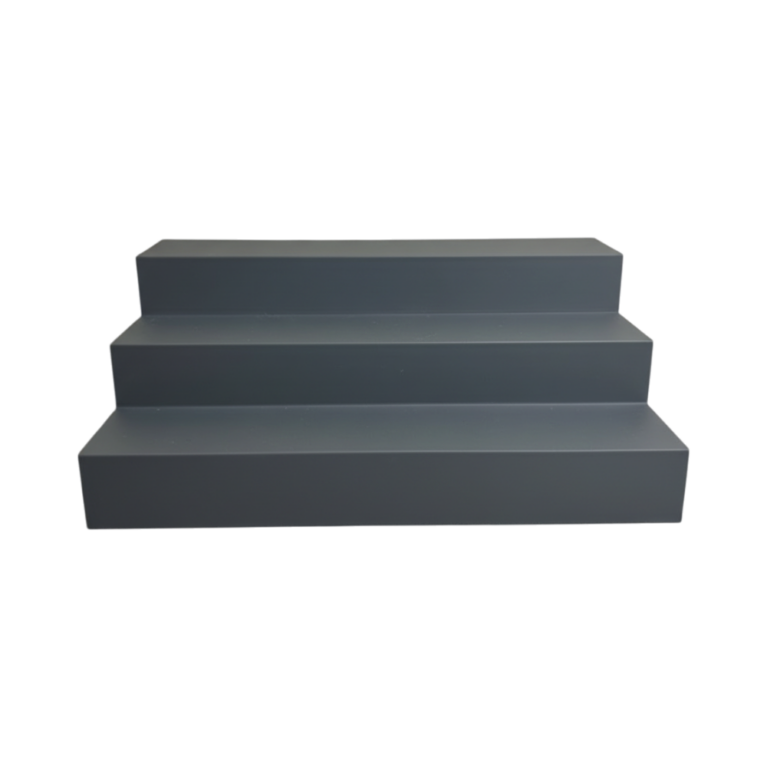
If most of your collection lives in a drawer and only the daily items are out, a tiered stand handles those better than a rotating pot — everything visible at once, nothing to spin. The cloud display stand does this in a shape that suits a dressing table rather than a shop.
And for the consumables that come in packaging — pads, Q-tips, hair ties — decanting into a dedicated holder removes the single largest source of visual clutter on most vanities.
Cleaning it
Powder settles in the bottom of the wells and lifts straight off a smooth finish with a damp cloth. Do it every few weeks rather than every few months — pigment that has been sitting in a corner for a year becomes a job rather than a wipe.
Keep acetone and solvent-based removers away from printed organisers; they attack the surface. Micellar water and mild soap are fine.
The bathroom and vanity range is printed to order in Canada, so an organiser sized to a specific drawer or counter depth is a request rather than a compromise.