Printed lampshades do something moulded ones cannot: complex internal geometry that throws patterned light. They also have one real constraint, which is heat. Get the bulb right and they last indefinitely. Get it wrong and you will warp a shade in an evening.
LED only, and it is not negotiable
Use LED bulbs. Incandescent and halogen bulbs put out enough heat to soften standard printing materials, and the deformation is permanent. A modern LED runs barely warm to the touch, which is why printed shades became practical at all. Anything we ship is designed around LED, and we will say so on the listing.
Wall thickness changes everything
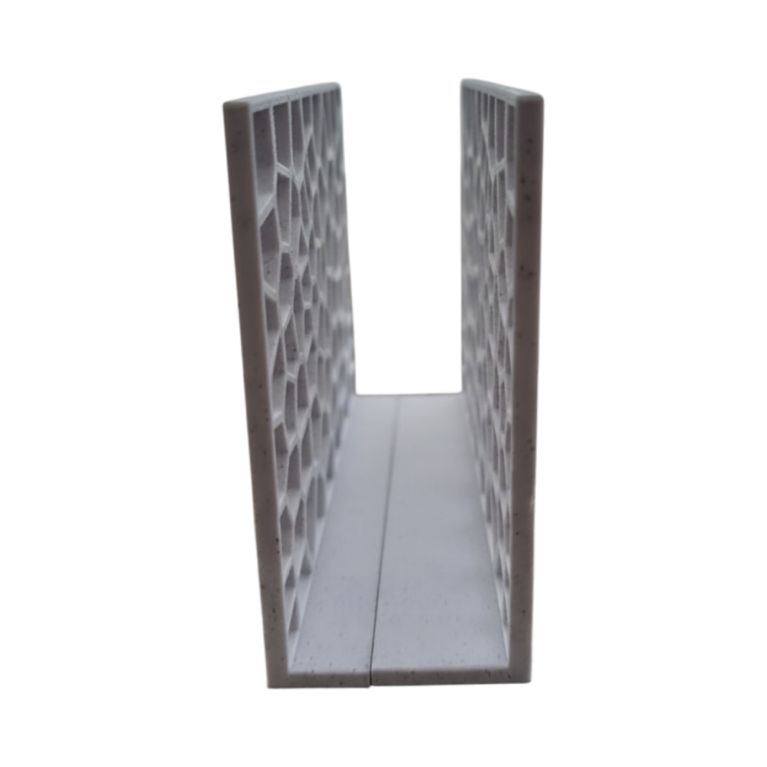
A thin printed wall glows and shows the layer lines as fine horizontal striping – which, done deliberately, is the whole point. A thicker wall blocks more light and throws the pattern outward instead. Neither is better; they are different effects. If you want ambient glow, look for thinner-walled designs. If you want patterns on the wall, look for pierced geometry like the Voronoi style.
Where the light goes
Think about it as three jobs. A lamp for reading needs light aimed down at a surface – a desk lamp shape. A lamp for atmosphere throws light up and outward and is not meant to help you see. A lamp as an object, like the Honeycomb Table Lamp, does a bit of both and mainly earns its place by looking good switched off. Decide which one you are buying before you judge it.
Colour temperature matters more than brightness
A warm bulb around 2700K through a printed shade looks like lamplight. A cool 5000K bulb through the same shade looks like a fridge. Most disappointment with decorative lighting traces back to bulb colour rather than the fixture.
Cleaning
Dust settles in the ridges. A soft brush or a blast of compressed air handles it in seconds. Do not use solvent cleaners – alcohol wipes can craze some materials. There is more detail in our guide on caring for printed pieces.
Custom sizes
Shades are one of the easiest things for us to resize, because there is no mould involved. If you have a base that needs a specific fitting or diameter, measure it and tell us the numbers. Printing one to fit is usually cheaper than hunting for a match.