Most of the objects in your house were made a long way from you, in very large numbers, months before you decided you wanted one. That is the logic of mass production: build a mould, run a hundred thousand units, ship them across an ocean, and store them until somebody buys them. It works, and it is why a plastic organiser costs four dollars. It also explains a lot of what is frustrating about buying household objects — the sizes that are almost right, the colours nobody chose, the piece that broke and cannot be replaced on its own.
Creative manufacturing is the other approach. Design the thing properly, make it when somebody orders it, and keep the ability to change it. At Compl3x that is not a slogan; it is the reason the workshop exists.
What creative manufacturing actually means
It is the combination of three things that are usually kept apart: product design, engineering and production, under one roof and on a short loop. A design gets drawn, printed, held in a hand, criticised, adjusted and printed again — often in the same week. There is no tooling to amortise, so there is no reason to defend a design that is not working.
The practical consequence is that the product you receive is usually on its fifth or fifteenth revision rather than its first, and the revisions were driven by use rather than by cost engineering. When a shelf bracket flexes more than it should, it gets thicker. When a lid is annoying to open, the lip changes. Nobody has to wait eighteen months for the next tooling cycle.
Made to order is not the same as slow
The most common assumption about made-to-order production is that it must be slower than buying off a shelf. In practice the difference is a few business days, because the production step is measured in hours and there is no international freight leg in the middle.
What it removes is worse than a few days of waiting: the warehouse full of guesses. Mass production forces a company to bet on how many blue ones people will want in March. Everything they guessed wrong about either sits in a warehouse costing money or ends up discounted into a landfill. Producing to order removes the bet entirely.
It changes what a product can be shaped like
Injection moulding is a brilliant process with one hard rule: the part has to come out of the mould. That single constraint is responsible for an enormous amount of how mass-produced objects look — the draft angles, the uniform wall thicknesses, the absence of internal structure, the way almost everything is a shell.
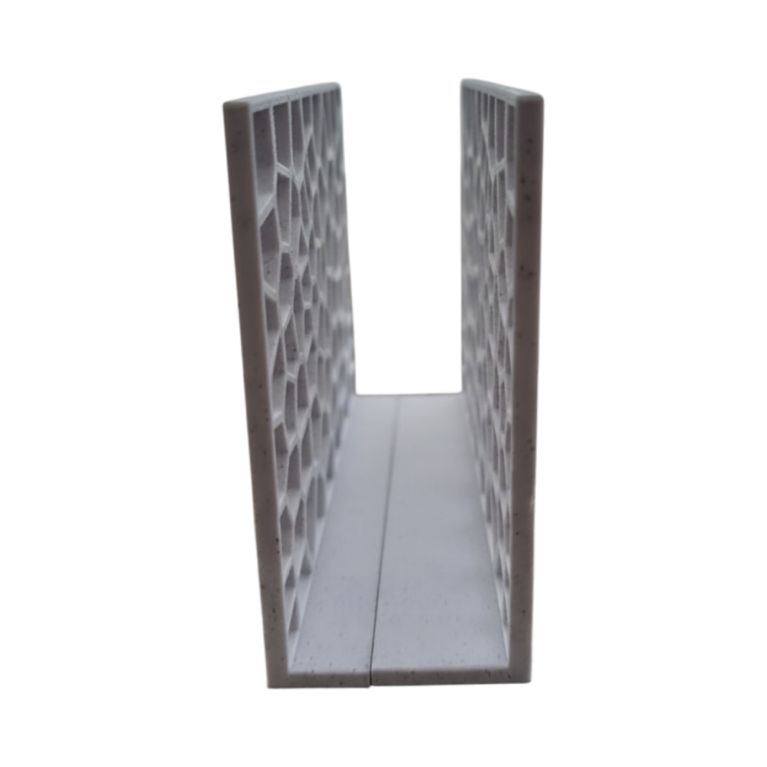
Additive manufacturing does not have that constraint. A part can have internal lattices, continuous compound curves, captive moving joints printed in place, undercuts that no mould could release. That is why a printed vase can have a geometry no potter or moulder could make, and why a household piece can be hollow where it needs to be light and solid where it needs to be strong. The shape follows the job instead of following the process.
Small runs stop being a problem
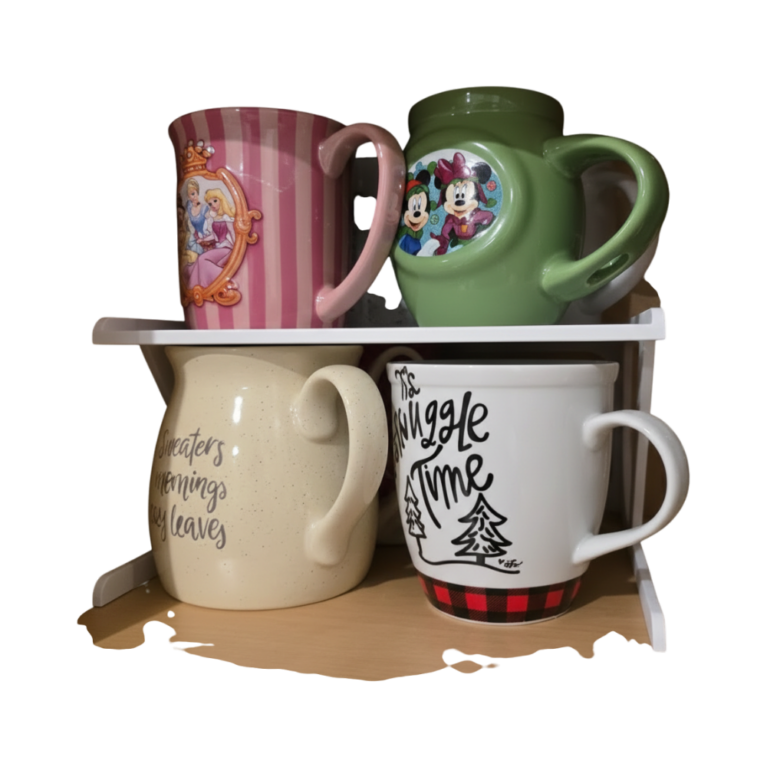
In conventional manufacturing, the economics punish anything niche. If only four hundred people in the country need a bracket for one specific thing, no factory will make it, because the tooling cost has to be spread across far more units than that. Those four hundred people simply go without, or buy something that nearly fits.
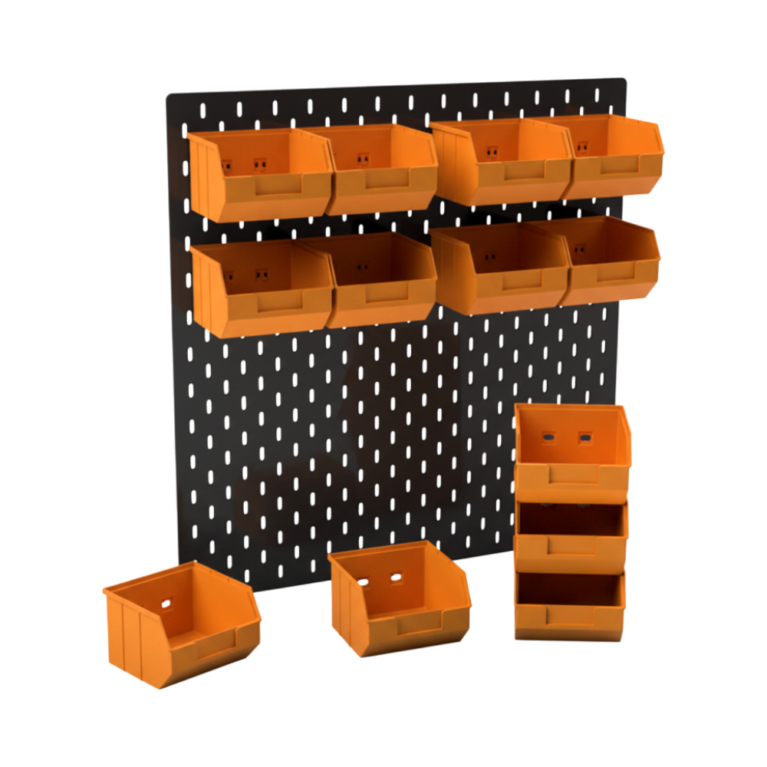
Made-to-order production makes a run of four hundred and a run of four cost roughly the same per unit. That is the whole reason our catalogue can carry organisers for specific drawers, holders for specific devices and display pieces that would never survive a buyer’s meeting at a big-box retailer. It is also why a custom commission is a normal conversation here rather than an exception.
What it asks of the buyer
It is worth being honest about the trade-offs. A made-to-order piece is not the cheapest version of that object in the world — it cannot be, because nobody is spreading a mould across a hundred thousand units. There is a short production window rather than same-day dispatch. And a printed polymer part is not a cast iron part; it has a service envelope, and we would rather tell you what it is than pretend otherwise.
What you get in exchange is a piece designed by the people who make it, produced in the country you live in, in the colour shown on the listing, that can be replaced or adapted later because the design still exists as a live file rather than a retired mould.
Why we build this way
Compl3x started because the gap between “someone should make this” and “you can buy this” is mostly a manufacturing problem, not an ideas problem. Closing that gap means owning the whole loop: designing in-house, testing in-house, and producing in-house in Canada.
If you want to see what that produces, the catalogue is the short answer — a few hundred pieces across household, sculptures, toys and recreation. If you have something specific in mind that nobody makes, that is the more interesting conversation: tell us about it.