Plenty of home offices were assembled in a weekend several years ago and never revisited. The tell is usually the same handful of details.
1. Raise the monitor
Top of the screen at eye level. Most setups are two to four inches too low, and the resulting neck angle is why the afternoon feels longer than the morning. A riser fixes it and gives you storage underneath.
2. Route the cables along one path
Not hidden in a drawer – routed. Clipped along the back edge, dropping to the floor at a single point. It takes fifteen minutes and it is the change people notice most on a video call.
3. Add a second light source
One overhead light produces flat, tiring illumination and terrible camera footage. A lamp at desk level, off to one side, fixes both. A desk lamp that looks like something rather than an appliance does double duty.
4. Make the small objects match
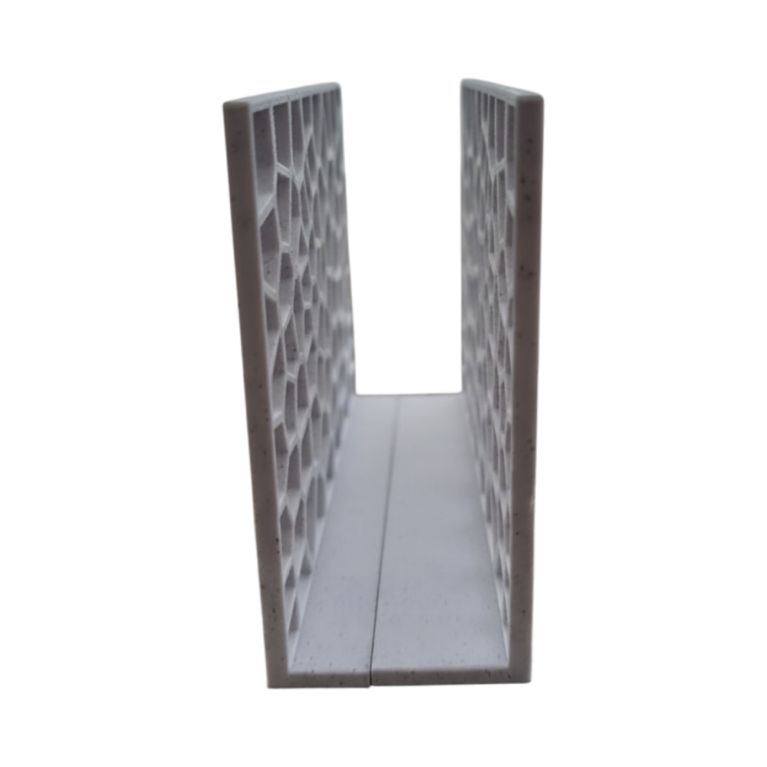
Pen cup, tray, cable clips, riser – if they are four different colours and materials, the desk reads as improvised. Printed to order in one run, they match exactly. The Stackable Desktop Organizer is a good anchor to build a set around.
5. Put something alive or interesting in frame
A plant, a sculptural piece, anything that is not a screen or a cable. It softens the room and gives your eyes somewhere to rest during a long call. A small planter or a piece from the sculptures range does the job.
6. Clear the front third of the desk
Everything drifts to the space directly in front of you. Keeping that strip clear is the difference between a desk that feels usable and one that feels like a shelf you happen to type on.
None of this requires new furniture, and all of it can be ordered in matching colours. If you are doing several desks for a team, ask for a quote – there is no minimum quantity.