Storage is rarely a shortage of space. It is a shortage of the right space — a drawer divider that is two centimetres too wide, a shelf that does not fit the wall you have, a holder for the one thing that does not come with a holder. Mass-produced storage is made in a handful of sizes because tooling is expensive; everything else, you are expected to adapt to.
Made-to-order production removes that constraint. Here is a room-by-room look at where printed organisation actually earns its place, and where it does not.
The desk
The desk is where printed organisation is most obviously worth it, because desks are the least standardised surface in the house. Everyone’s is a different combination of monitor, laptop, pens, cables, phone, headphones and one weird object that has nowhere to live.
What works well: pen and tool cups with a footprint small enough to leave working room; cable management that clips to a specific desk edge thickness; monitor and laptop risers sized to your actual eye height; a document or card holder that stands at the angle you read at.
What to look for: a base heavy or wide enough that you can grab from it one-handed without it tipping. This is the difference between a desk organiser you keep and one that annoys you.
The kitchen
Kitchens punish anything poorly made, so this is where material choice matters most. Heat, water and daily handling are all present.
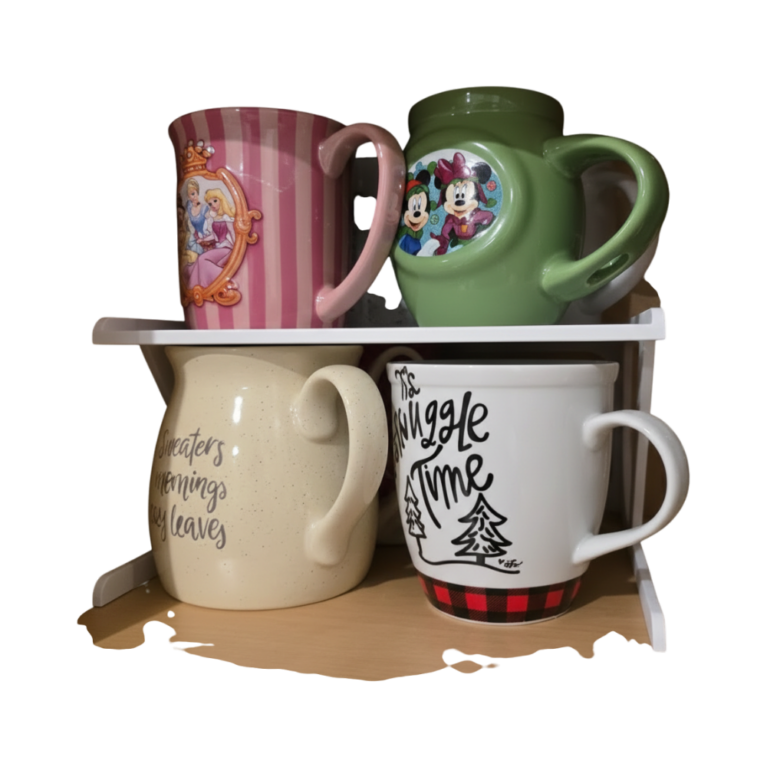
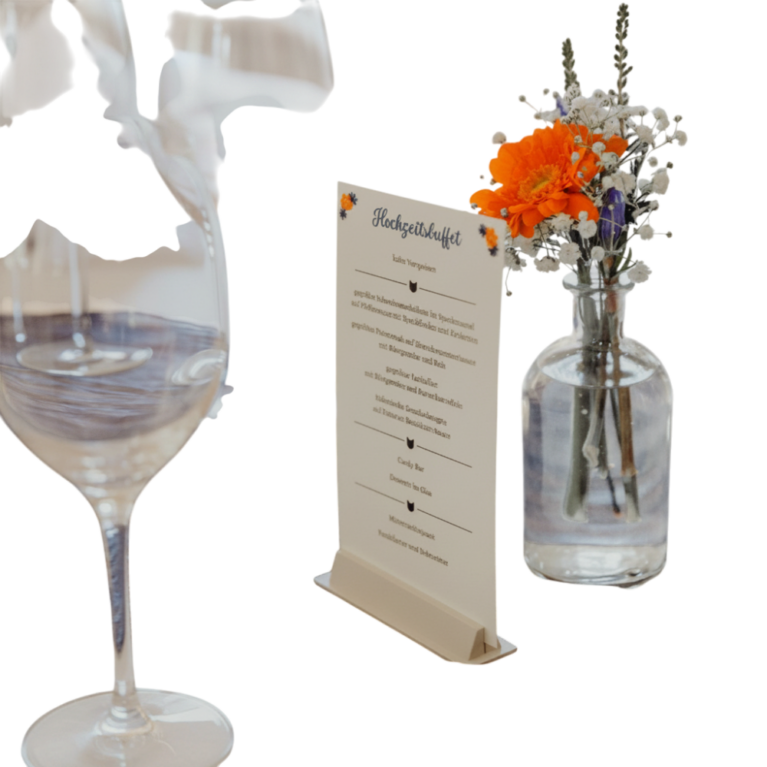
What works well: spice and jar organisation sized to the jars you actually buy; mug trees and cup shelves that use vertical space above a counter; utensil holders; menu, recipe and card stands; drawer dividers cut to your drawer rather than to a standard.
What to watch: nothing printed belongs in a dishwasher, and nothing printed should hold food directly. Keep food in packaging, on a plate or in a liner, and wash pieces by hand in warm water.
The bathroom
A bathroom is mostly a moisture problem. Printed polymer does not absorb water, which is an advantage over wood and MDF, but it does need to be shaped so it drains rather than holding a puddle.
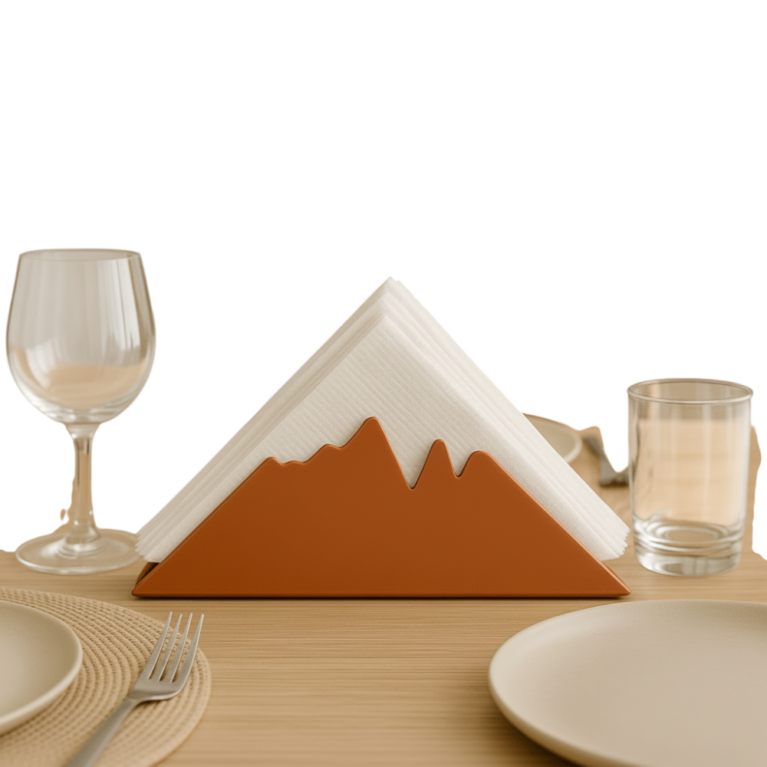
What works well: toothbrush and razor holders, soap trays with a drain profile, small counter caddies, tissue and roll holders.
What to watch: give it a spot outside the direct shower spray. Occasional splashing is fine; constant hot steam is hard on any polymer.
The entryway
The entryway collects keys, sunglasses, dog leads, masks, chargers and post. It is also usually the smallest surface in the house.
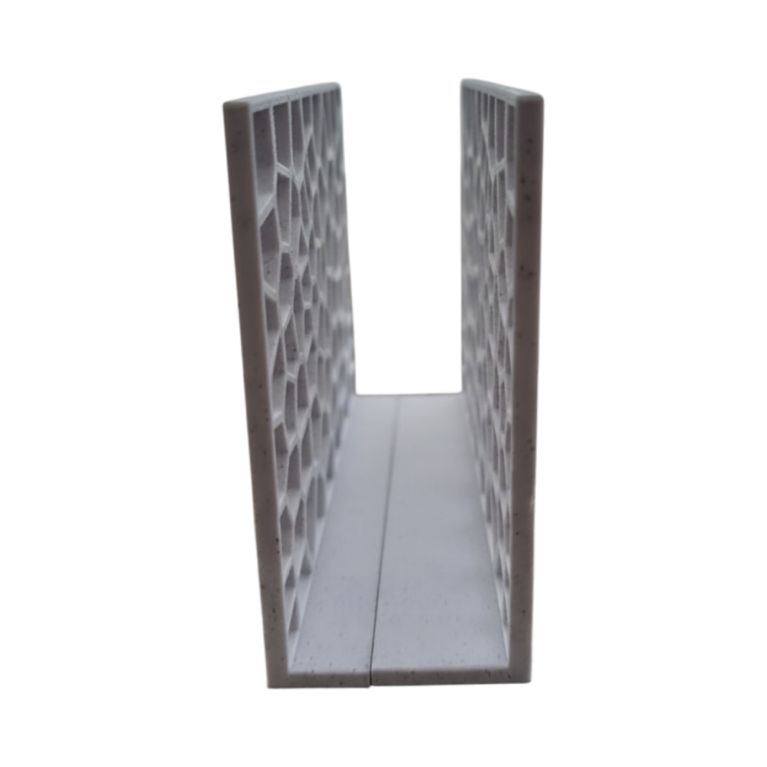
What works well: a catch-all tray with a lip deep enough to actually hold keys; wall hooks sized for what you hang; a slim shelf for the ledge that is too narrow for anything sold in a shop.
The workshop, garage and hobby bench
This is where made-to-order storage is genuinely hard to replace, because the things being stored are non-standard by definition: specific bit sizes, specific paint bottles, specific dice, specific components.
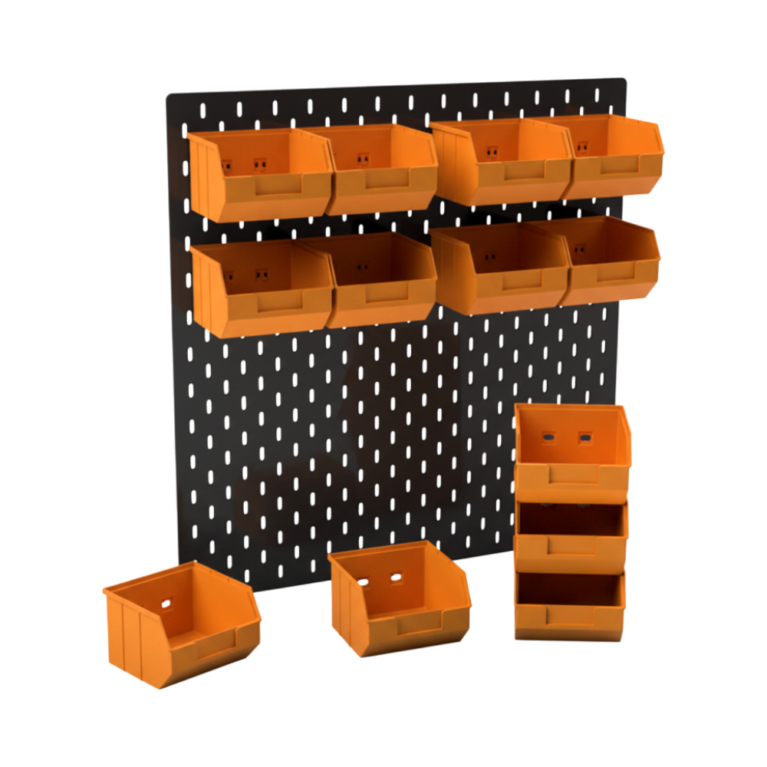
What works well: bin systems that stack and mount to a pegboard or rail; holders sized to a particular tool; dice towers, trays and game storage; component drawers labelled for what you actually keep.
The kids’ room
Two honest notes. Printed pieces are not certified children’s toys, and some designs have small parts. For storage rather than play — bins, shelves, book ledges, display pieces — they work well, and being able to get the exact colour is more useful here than anywhere else in the house.
Where printed storage is not the answer
It is worth saying plainly. If you need something to carry a genuinely heavy load, something safety-critical, something that will live in a hot car or full outdoor sun without being made for it, or something that must be sterilised — printed polymer is the wrong tool, or at least needs a different material and a design conversation.
How to get the size right
Measure first, order second. If a listing does not state the dimension you need, ask before you buy — we keep the measurements for everything we make. And if the size you need does not exist, that is not a dead end: resizing an existing design is one of the simplest jobs the studio does. Tell us the dimensions and we will confirm what is possible, or start from the full catalogue.